
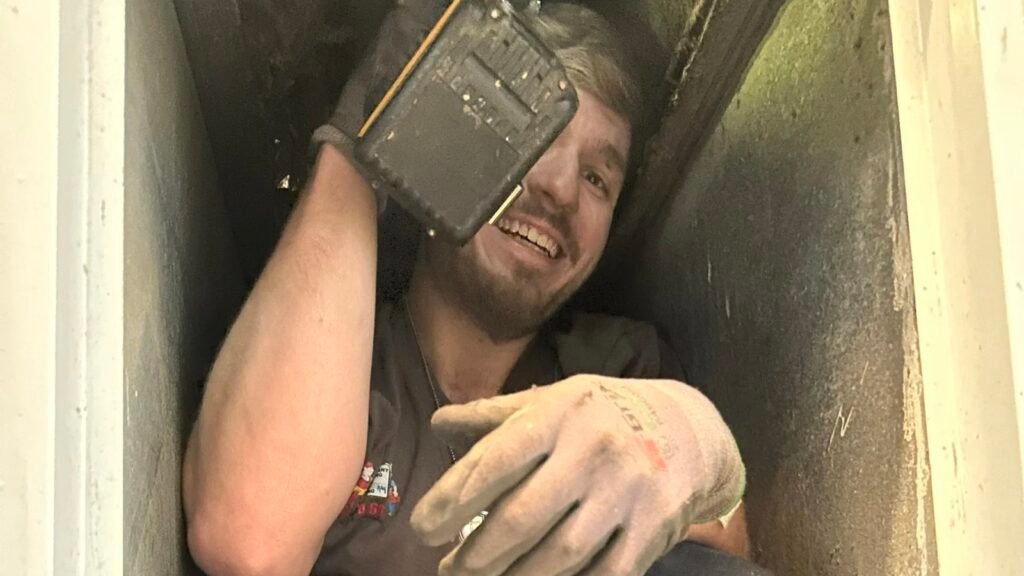
A heating and cooling technician spends more time in your attic and on your roof than any other tradesperson who visits your house. Twice a year on a maintenance plan, more often if something breaks, we are up there checking the furnace flue, the air handler, the condensate line and the vents that run out through the shingles. We see a lot of roofs from the inside.
That means we are usually the first to notice when something above the equipment is wrong, and it is not always ours to fix. This article covers what a technician is looking at on a tune-up, the roof problems a visit tends to uncover, and how to tell which ones are an HVAC call and which ones need a roofer. New Albany Heating & Air has been doing this for families in Southern Indiana and Louisville since 1978, and the attic is where a lot of the small problems start.
What a technician is actually looking at up there
A tune-up is not just the furnace or the outdoor unit. The parts that connect your system to the outside world are the ones that fail quietly, and most of them run through the attic and the roof.
- The flue. A gas furnace or water heater vents combustion gases through a metal flue that exits the roof. We check that the sections are connected, pitched correctly, and that the flue is clear. We also look at where it goes through the roof deck, because that is where rust and water staining show up first.
- The condensate drain and pan. Air conditioners and high-efficiency furnaces make water. If the air handler is in the attic, that water drains through a line, and if the line clogs, an overflow pan and float switch are the only things between the unit and your ceiling. We flush the line and test the switch.
- PVC vent pipes. A 90-plus furnace vents through white PVC. It has to slope back toward the furnace so condensate drains the right way. A pipe that was never sloped right, or that sagged over the years, holds water and leaks at the joints.
- Exhaust fan terminations. Bathroom and kitchen fans are supposed to vent outside. A lot of houses in this area have one or more that stop in the attic. Every shower pushes warm, wet air into the insulation, and in winter it condenses on the roof deck.
- The attic itself. Insulation depth, moisture, signs of pests, and whether anything is blocking soffit vents. None of that is HVAC equipment, but all of it affects how hard the system has to work.
Five roof problems a tune-up tends to find
These are the things we notice that are not ours to fix. A homeowner usually has no idea they are there until a technician mentions it or the ceiling starts to stain.
- Cracked pipe boots. The rubber collar around every vent pipe that goes through the roof dries out and splits after 10 to 15 years. From inside the attic, it shows as a water line running down the pipe or a damp ring in the insulation around it.
- Flue flashing and storm collar. The metal flashing around the furnace or water heater flue is sealed with a storm collar. When the sealant fails or the collar slides down, water runs inside the flashing and drips next to the flue.
- Stained or soft roof decking. Dark staining on the underside of the roof boards, or a spot that gives under a thumb, means water has been getting in for a while. Near a vent, it is usually the boot or flashing. In the middle of a run, it is the roof.
- Daylight around a penetration. If you can see light around a pipe from inside the attic, the flashing is gone or was never right.
- Lifted shingles around the equipment. The area around vent stacks sees the most foot traffic on a roof, from every trade including ours. Popped nails and lifted tabs there are common, and they are the roof’s problem, not the furnace’s.
When to call a roofer
If a technician tells you the flashing around the flue is shot, or the attic shows a stained deck near a vent, that is a roof repair, and we will say so rather than guess at it. The tell is timing: water that shows up during or after rain is the roof. Water that shows up on a hot day with the air conditioner running, or in cold weather with the furnace on, is usually the equipment or a vent that stops in the attic, and that is our side.
For roof work around vents and flues, we send homeowners on both sides of the river to HKC Roofing & Construction. They have been repairing residential roofs in Louisville and Southern Indiana since 2004, they handle boots, flashing and storm collars as a standard repair visit, and they offer a free roof analysis, so if the answer turns out to be the furnace after all, you will hear it before you pay for anything.
What we fix on our side
The problems that are ours are also the ones that get mistaken for roof leaks most often.
- Clogged condensate line. Algae builds up in the drain line over a summer. We flush it, treat it, and test the overflow switch so the unit shuts off before the pan spills.
- Cracked or rusted drain pan. A secondary pan under an attic air handler is a wear item. We replace it when it fails.
- Mis-sloped PVC vent. We re-hang the pipe so condensate drains back to the furnace instead of pooling in the run.
- Flue connections. Disconnected or back-pitched flue sections are a safety issue first and a water issue second. We reconnect and re-pitch them on the spot.
- Exhaust fans that end in the attic. We extend the duct to a proper roof or wall cap. The cap itself is a roof penetration, so on an older roof we will tell you to have the roofer flash it.
Most of this is covered under a maintenance plan visit, which is the cheapest way to catch it before it costs a ceiling.
A twice-a-year checklist
Spring, before the AC season
- Have the condensate line flushed and the float switch tested
- Walk the attic once with a flashlight and look at every pipe that goes through the roof
- From the ground, look at the roof around each vent cap for lifted shingles
Fall, before the heating season
- Have the furnace flue and vent inspected during the tune-up
- Confirm every bathroom and kitchen fan vents outside, not into the attic
- Check that the attic insulation is dry around every penetration
If you have both an HVAC company and a roofer out in the same year, tell each what the other found. The roof around the equipment and the equipment under the roof tend to fail for the same reasons, and the fix is often on both sides.
Schedule a tune-up before the season turns
A tune-up visit covers everything in this article on the HVAC side: the flue, the condensate line, the vents and the attic conditions around the equipment. If we find something that belongs to the roof, we will tell you who to call.
Call (812) 944-6019 or schedule furnace service online. New Albany Heating & Air serves Southern Indiana and the Louisville area, with 24-hour emergency service seven days a week.