
Home » Furnace Maintenance
Almost every no-heat call we run in January is a problem that was visible in October. A dirty flame sensor, a weak igniter, a clogged burner, a flue starting to corrode. None of those fail politely. They wait for the coldest night of the year.
A furnace tune-up is one seasonal visit to catch those things while they are still cheap, and to check the parts that are a safety matter rather than a comfort one. Our maintenance agreement is the same work on a schedule, twice a year, so nobody has to remember to book it.
We have been doing this out of New Albany since 1978, across Kentuckiana. If your furnace is fine, we will tell you it is fine.
A furnace in an older New Albany house is often working harder than it should. Many homes here were built long before central heating, so the furnace was retrofitted into a basement or closet, the ductwork was threaded in wherever it would fit, and the returns were undersized the day they went in. All of that makes the system run longer and hotter to hold a temperature.
That matters most for one part: the heat exchanger. The harder a furnace cycles, the more stress that component takes, and a cracked heat exchanger can leak carbon monoxide into your home’s air. CO is odorless, which is exactly why our winter check inspects the heat exchanger for cracks and tests for gas leaks, not just the things that affect comfort.
A fall tune-up is also the cheapest insurance against a January breakdown, when our schedule fills with people who already have no heat and a cold house does real damage, starting with frozen pipes.
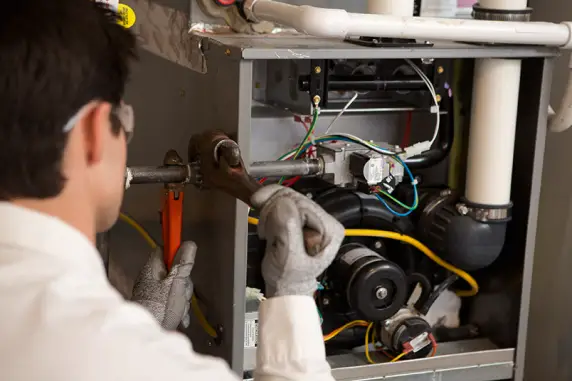
We clean the burners and heat exchanger and check them for cracks or damage, then test all safety controls for proper operation. This is the part of the visit that is about safety rather than comfort, and it is the one we never rush.
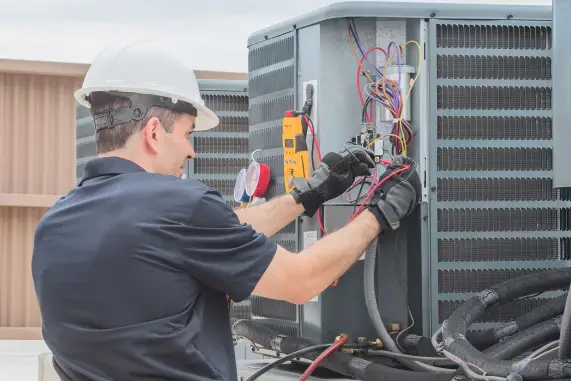
We check for gas leaks in the furnace, inspect the flue pipe and draft diverter, and confirm the furnace is venting properly. Bad venting is how combustion gases end up somewhere they should not be.
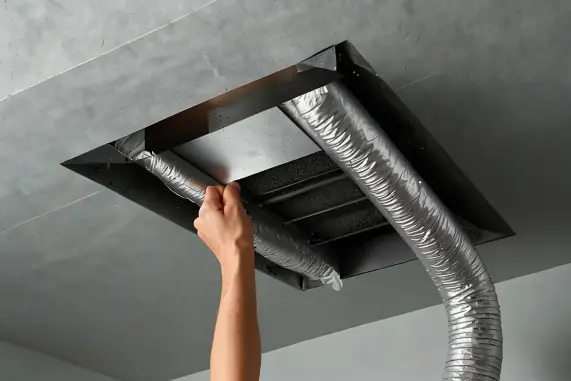
We clean and adjust the pilot assembly and adjust the burner for efficiency. A furnace burning clean uses less gas and is less likely to strand you on the coldest night.
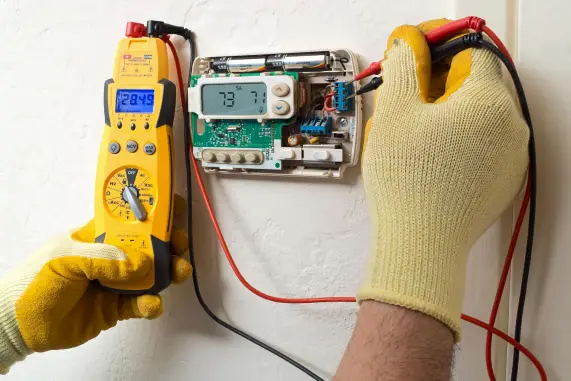
We lubricate moving parts, check the belt and adjust its tension. Worn belts and dry bearings are cheap to fix on a tune-up and expensive to ignore.
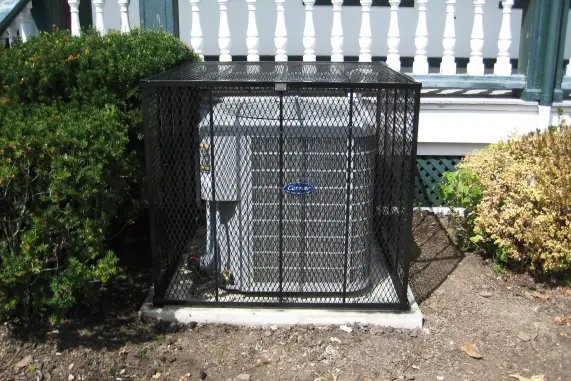
We check the thermostat for calibration and operation, then run a complete furnace cycle to confirm the whole system starts, runs, and shuts down the way it should. Then we tell you what we found, including what is fine.
A one-off furnace tune-up is fine. If you would rather not think about it again, our maintenance agreement puts this winter furnace check and a spring AC visit on a schedule for one flat annual price, and we call you to book both.
See the full plan, including the spring AC check and the parts discount, on our maintenance agreement page. Or call (812) 944-6019 to sign up.
A tune-up is the easiest visit in this trade to turn into a sales call, and a no-heat scare is the easiest way to sell a furnace. We would rather keep the one you have running safely for another few years and tell you honestly when it is genuinely time.


We install Goodman and Amana systems, so those are the ones we know best. Our technicians maintain every major furnace brand, whether we put it in or not.
If you are not sure what you have, call us. After 48 years, we have very rarely met a system we could not work on.
Posted on Google
 Payton Larson
Trustindex verifies that the original source of the review is Google.
Quick, efficient, kind and knowledgeable - Michael really got me out of a pinch on a same day call. What felt like a disastrous start to the day shaped up after calling these guys. I will gladly be giving them my business from now on. Thank you all so much for your great work!Posted on Google Mindy MilburnNAH&AC is our go-to. They are quick to respond to voicemails, quick to show up on site, are always friendly and the prices are always fair. Today, Chris showed up 30 minutes after we called and was able to get my mom's AC (which is an ancient unit) up and running quickly. We were so grateful for the excellent and fast customer service.Posted on Google
 james stillwellAir stopped working on a 93 degree Saturday evening in July. Reached out to several companies and Billie fron New Albany Heating and Air quickly got back to me. He arrived in the dark, when he said he would, and had the issue diagnosed and fixed within 15 minutes. Outstanding in every way....many thanks!Posted on Google
 Whitney Vera GuevaraGreat experience all around. Tech. Mike was very respectful and helpful. Came out and gave me the diagnosis , the part needed had to be order kept very open communication along the way, came out got the repair done quickly and a very reasonable price. Couldn’t be happier with my experience. Much respect and appreciation!Posted on Google
 Dustin GoodlettJoe and his guys at Book Heating and Air are second to none. Their customer service is incredible and have always treated us like our business is valued.Posted on Google
 David SheehanCan’t say enough about this company!!! This team is a class act and they know their stuff. Michael, Michael, Nick, Scotty and Chris took care of us on a Saturday afternoon. I was blown away by their professionalism and courtesy!! Keep up the good work!Posted on Google
 Steven RowlandFantastic company to work with and provided Excellent Service! Michael came out immediately and solved my issues in no time.Posted on Google
 Lindsey UnderwoodNew Albany H&A is on time, consistent and reliable The prices are very competitive Thanks for your helpPosted on Google
 Sara GlassNA Heating and Air has been our provider for years. They maintain our furnace and a/c, and on the rare occasion we have a problem, respond quickly. When it was time to replace the furnace, we chose them. Our previous unit had a 10 year warranty, at 16 years going into winter, we chose to be proactive, and had a new unit installed. We recommend them without reservation!